
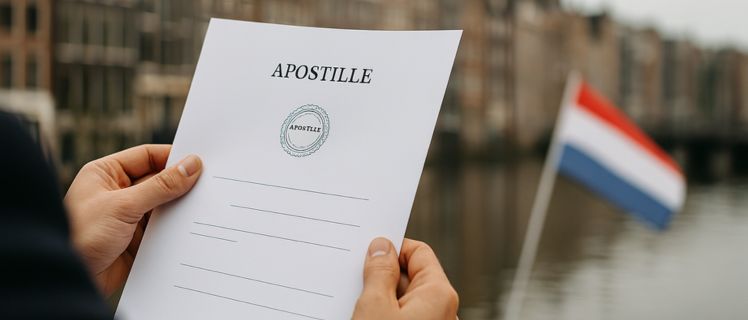
How to Apostille Documents for the Netherlands
Verification of documents is one of the most important things you need to do when you plan for studies, work, or settlement in the Netherlands. This verification process ascertains that your certificates are genuine and accepted by Dutch authorities. Apostille is the easiest and most recognized way to verify Indian documents for use in the Netherlands.
The goal of this blog is to explain what an apostille is, why it is required for the Netherlands, what kind of documents require an apostille, and how one can easily get it done in India.
What is an apostille?
An apostille is a kind of official certification or stamp that is put on a document to confirm its authenticity. It is an attestation issued by the Ministry of External Affairs in India. Once a document gets an Apostille stamp, it becomes legally valid in all the countries that are parties to the Hague Convention of 1961.
The Netherlands is one of these countries. That means Indian documents that carry an apostille are directly accepted there without requiring further attestation from the Netherlands Embassy.
Some of the various document types on which an apostille is used include
- Degrees, diplomas, or transcripts of educational certifications
- Personal documents, such as birth, marriage, or death certificates
- Commercial documents, such as trade licenses, business agreements, or invoices
The Apostille stamp itself includes information like the name of the country, the name of the person signing the document, the authority issuing it, and an official seal or signature.
Why Apostille is Required for the Netherlands
If you are going to the Netherlands for education, employment, business, or immigration, your Indian documents have to be legally recognized there. The Dutch government and institutions will accept your papers only if they are verified to be genuine.
The Apostille will help with that: it shows that your document has been checked and approved by Indian authorities. It stops fraud and smooths the way when you apply to universities, for jobs, or for residency permits.
Without the apostille, your documents may not be accepted, and the processing of your application could be delayed or refused. This is why it is important to get this done before submitting any document abroad.
Documents That Require Apostille
Following are the most common types of documents that need an apostille for use in the Netherlands:
- Educational Documents: A degree certificate, diploma certificate, mark sheets, transcripts, and school certificates.
- Personal Documents: Birth certificate, marriage certificate, death certificate, and affidavit.
- Commercial Documents: These include power of attorney, business contracts, company registration, and export documents.
The process is slightly different for each type of document, depending on which authority must verify it first.
Step-by-Step Process to Apostille Documents for the Netherlands
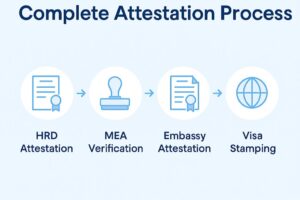
The apostille process in India consists of a few clear steps. Let’s have a look one by one.
Step 1: State-Level Verification A document must be verified from the relevant state authority before it can be apostilled by the MEA.
This is necessary for the attestation of educational documents. For example, if your university is in Tamil Nadu, you should get HRD attestation Chennai first, which proves that your educational certificate is genuine.
The verification of personal documents is done by the Home Department or the SDM.
Verification for commercial documents is made by the Chamber of Commerce.
This is the first step, and it’s an important one, as MEA would apostille the documents only if they are from the right department.
Step 2: Apostille by the Ministry of External Affairs (MEA)
After your document has passed the verification at the state level, it is sent to the Ministry of External Affairs. The MEA will then verify the same document and grant an apostille stamp or sticker. A stamp containing a unique identification number will be provided, which can also be checked online.
With this step, your document is recognized as an officially attested document in the Netherlands, and you do not need to visit the Dutch Embassy or Consulate for any further attestation.
Step 3: Collection of Documents
You will be able to collect the documents after the apostille process is completed or have them delivered through a courier service in case you applied through an authorized agency. Apostille Services in India In big cities, you can find authorized agencies that will deal with Apostille work on your behalf. Examples are apostille services in Delhi and apostille attestation in Mumbai since they are among the biggest venues where documents are processed.
These agencies make the process easy: they pick up the documents, verify, attest to, and deliver them. This saves time and avoids mistakes that may further delay your application. It’s always recommended that you use an authorized service provider from MEA for the proper processing of your papers.
Time Taken for Apostille
The time needed to complete the apostille in India is dependent on the document type and the verification process of the state. It generally takes 2 to 7 working days.
Regarding time, if your documents already bear the required state attestation, the MEA Apostille can be completed in as short a period as one or two days. If your papers are yet to get attested from the HRD or Home Department, then it may take longer.
Cost of Apostille in India
The cost of getting your documents apostilled varies depending on the type of document and whether you use a service provider. Educational, personal, and commercial documents all have their separate fee structures.
The general practice of authorized agencies is to charge a small service fee in return for handling your documents safely and quickly. It’s always best to check current rates and get a clear quote before commencing the process. What is emigration check ? While you are preparing your documents to use abroad, it is also helpful to understand what an emigration check is. It is a system set up by the Indian government to protect workers who travel overseas for employment.
Passports in India are categorized into two:
ECR and ECNR. If your passport has an ECR mark, you must obtain approval from the Protector of Emigrants (POE) before exiting India to certain countries.
In general, people holding higher education qualifications or professional jobs hold an ECNR passport and as such do not need this check. It is thus advisable to confirm one’s passport type in advance before proceeding with visa applications or apostille for complete assurance.
Benefits of Apostille for the Netherlands
- Saves time and effort: Since the Netherlands accepts Apostille, you are not required to have separate embassy attestation.
- Legally accepted worldwide, the Apostille stamp is recognized by all member countries of the Hague Convention.
- Verification is easy: every apostille has an identification number that can be checked for validity online.
- Makes Application Easier: Be it a job application, a study visa, or a family visa, an apostilled document will ease the whole process.
Final Thoughts
Getting your documents apostilled to the Netherlands may sound complicated, but it really is not once you understand the steps involved.
First, get the attestation from HRD Chennai or, in your case, from your state for educational documents. Then, you need to send your attested documents to the MEA for apostille. You can even make this easier by availing of apostille services in Delhi or apostille attestation in Mumbai; professionals will do the entire procedure on your behalf.
Always double-check your passport details before traveling and understand what an emigration check is to ensure a smooth experience abroad. With proper preparation and support, your documents will be ready for use in the Netherlands quickly and without any stress.